Without perseverance and timing, hope is just optimism. With them, it becomes possibility.

Culture Intelligence (CQ)
Dive into expert advice, practical tips, and real-world experiences crafted to help founders and CEOs navigate HR challenges and grow their businesses confidently.
Marie Benjamin, Founder - BrightBridge HR
5/8/20242 min read
Culture Intelligence (CQ) often called Cultural Intelligence – is the ability to understand, adapt, and effectively interact with people from diverse cultural backgrounds. It’s a critical skill in our globalized world, whether in business, education, travel, or everyday life.
Here’s a concise yet comprehensive overview of what you should know:
1. What is Cultural Intelligence?
Cultural Intelligence is the capability to function effectively in situations characterized by cultural diversity. It goes beyond mere awareness of cultural differences; it involves the ability to interpret and respond appropriately to those differences in real time.
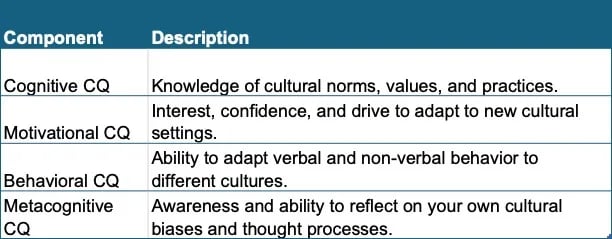
2. The Four Components of CQ
Researchers break CQ into four interconnected dimensions:
3. Why is CQ Important?
Global Business: Enhances cross-border collaboration, negotiation, and leadership.
Education: Supports inclusive classrooms and study abroad experiences.
Travel & Expat Life: Reduces culture shock and fosters meaningful connections.
Social Cohesion: Promotes understanding and reduces prejudice in diverse societies.
4. How to Develop Cultural Intelligence
A. Build Cultural Knowledge
Learn about the history, values, and social norms of different cultures.
Stay curious: Read books, watch films, and engage with media from other cultures.
B. Cultivate Mindset & Motivation
Embrace ambiguity and discomfort as part of the learning process.
Seek out cross-cultural experiences and relationships.
C. Practice Adaptive Behavior
Observe and mimic local customs (e.g., greetings, dress codes, dining etiquette).
Adjust your communication style (direct vs. indirect, formal vs. informal).
D. Reflect & Learn
After interactions, reflect on what went well and what could be improved.
Ask for feedback from people of different cultural backgrounds.
5. CQ in Action: Practical Tips
Listen More, Speak Less: Pay attention to non-verbal cues and context.
Avoid Assumptions: Not everyone from a culture fits the stereotype.
Ask Questions Respectfully: Show genuine interest in others’ perspectives.
Be Patient: Building CQ is a lifelong journey.
6. Common Pitfalls
Overgeneralizing: Assuming all individuals from a culture are the same.
Ethnocentrism: Judging other cultures by the standards of your own.
Superficial Adaptation: Mimicking behaviors without understanding their meaning.
7. Measuring Your CQ
There are assessments (like the CQ Assessment) that can help you gauge your current level and identify areas for improvement.
8. Resources to Explore
Books: The Cultural Intelligence Difference by David Livermore
Courses: Online platforms like Coursera offer CQ training.
Podcasts: Look for series on cross-cultural communication.
Reflection Question: What’s one cultural experience that challenged or expanded your perspective? How did you respond?
Ready to Transform Your Team with Cultural Intelligence? If this resonated with you and you’re eager to explore how Cultural Intelligence can drive collaboration, innovation, and growth in your organization, we’d love to help. Reach out via our contact form to schedule a customized workshop or consultation. Together, we’ll adopt a step-by-step approach to embed CQ into your team’s DNA and unlock its full potential.
Get in Touch – Let’s build a culturally intelligent future for your business.